Ship anti - fouling, the United States, new, Australia new regulations
Biological fouling of ship
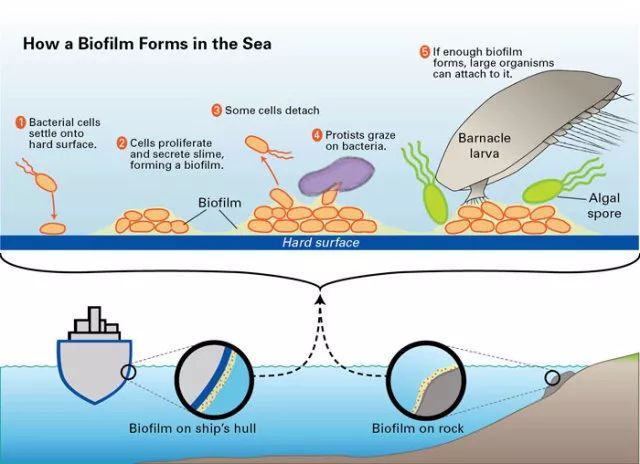
Introductionto Biofouling
Hull biological fouling refers to the biological pollution caused by the siltation of various aquatic organisms (microorganisms, plants, algae, and animals) in the underwater parts of a ship, which may cause alien aquatic species to invade the local Marine environment.
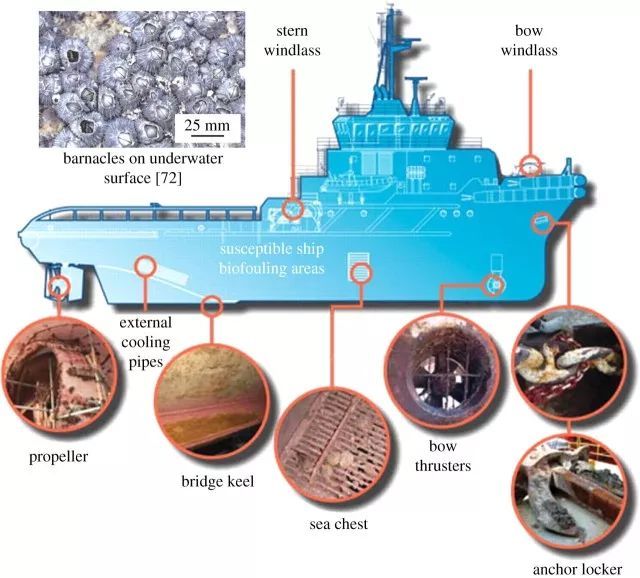
Even a small amount or slight amount of hull fouling can increase the resistance of the hull and propeller in the water, thus affecting fuel consumption (cost) and gas emissions. Therefore, in many cases, ship decontamination management can be regarded as an effective measure to improve ship performance and fuel efficiency.
Imo - hull biological fouling control

IMO passed the "ship antifouling system inspection guide" (AFS) on October 5, 2001, prohibiting the use of harmful organotin compounds in ship antifouling coatings and establishing a mechanism to prevent the use of other hazardous substances in ship antifouling systems. The AFS guidelines took effect on September 17, 2008.
AFS guidelines require states parties to prohibit and/or restrict the use of harmful anti-pollution systems on ships: ships flying the flag of the state party; Ships that have no right to fly the national flag but are authorized to operate by the relevant authorities; And all ships entering the country's ports, shipyards or Marine platforms.
Challenge
The laws and regulations of the state party have brought challenges to the disposal of anti-fouling bottom of ships
It is increasingly difficult to find a site that allows the hull's underwater parts to be cleaned and that meets environmental requirements. At the same time, New Zealand and California already have regulations on anti-fouling of ships, Australia is working on policies that could be followed by more places.
If it is difficult to find suitable sites for the underwater decontamination of the hull, the ship can be arranged into dry dock to deal with the debris from the shell spalling in an environmentally-friendly way. But this may raise two questions: whether the dry dock capacity (to clear the bottom) is sufficient and the cost of cleaning the hull increases.
Hull pollution has become a common point of controversy, both when the ship is successfully concluded and when the anti-fouling clause contained in the charter ship contract comes into effect.
It is not hard to imagine that the parties to the contract are likely to be involved in a dispute if they have to arrange for the ship to be dry-docked to clean the hull under certain circumstances. If a place can clear the underwater part of the hull, but the ship must sail a distance to arrive, it will also cause disputes between the contracting parties. Neither is ideal. In addition, we have not considered the risks that ships typically face while waiting to dock or to clean their hull.
Compared with voyage charter, time charter is more controversial. The development of local laws and regulations is not only related to time charter, both parties involved in the voyage charter will also be challenged by the laws and regulations of the state party. Imagine a ship waiting weeks in crowded port at the port of discharge, where it is prone to fouling. The ship then went to the port of discharge, but was told not to dock until the ship's decontamination was over. Where and how can the ship owners (ship operators) arrange for the ship to be defiled on the voyage?
Contrary to local legislation, BIMCO strongly recommends that shipowners voluntarily take measures under imo guidelines to control hull biological pollution and avoid the transfer of alien species from one area to another. These guidelines include painting ships with protective coatings and repairing and maintaining underwater parts of the hull.
To save fuel and improve ship efficiency, owners of course try to reduce ship fouling in all cases. At present, there is no list of submerged parts of the hull in each area.
State party legislation

Australia's new biofouling requirements for international commercial vessels
Biological fouling and ballast water from ships can bring pests and diseases into Australia.
Under the "biosafety act 2015", authorities are investigating the management rights of ships entering Australia's territorial waters.
We consulted with industry stakeholders in 2015 on the "national Marine pest safety review." At the meeting we recommended that Australia comply with IMO's directive to introduce new biological fouling requirements for ships to regulate international shipping.
We are gathering ideas to prepare a declaration of the type of ship covered by the biological fouling requirement, which is expected to take effect in early 2018.

New Zealand's regulations on biological fouling of ships
Ships must arrive in New Zealand as "" clean hull" "from May 2018. Ships that stay at a designated port (the place of first call) for up to 20 days are allowed to dock at New Zealand's port with a small amount of biological dirt. (according to the pollution area, it can be divided into mud layer, gooseneck barnacle and new dirt covering the original ship, but no more than 5% of its surface area)
Vessels that stay in port for more than 20 days or travel to New Zealand outside the port of first call are allowed only to carry mud and gooseneck barnacles.
The clean hull regulations will not come into effect until May 2018. But now the MPI can take action against ships with serious biological scum threats.

Requirements for biological fouling of ships - California
California ship biological fouling management requirements for the following ships:
New ship: ships delivered on or after January 1, 2018
Existing ships: ships that have completed their first scheduled docking repairs on or after January 1, 2018
Biological fouling management regulations for ships include (see the table below for detailed information) :
BiofoulingManagement Plan
船舶生物污垢管理計劃
· Biofouling Record Book
船舶生物污垢記錄簿
· Biofouling management of wetted surfaces andniche areas
船舶潮濕及壁龕位置的生物污染管理
· Requirements for vessels with extendedresidency periods.
可延期留存污染物船舶的規定